
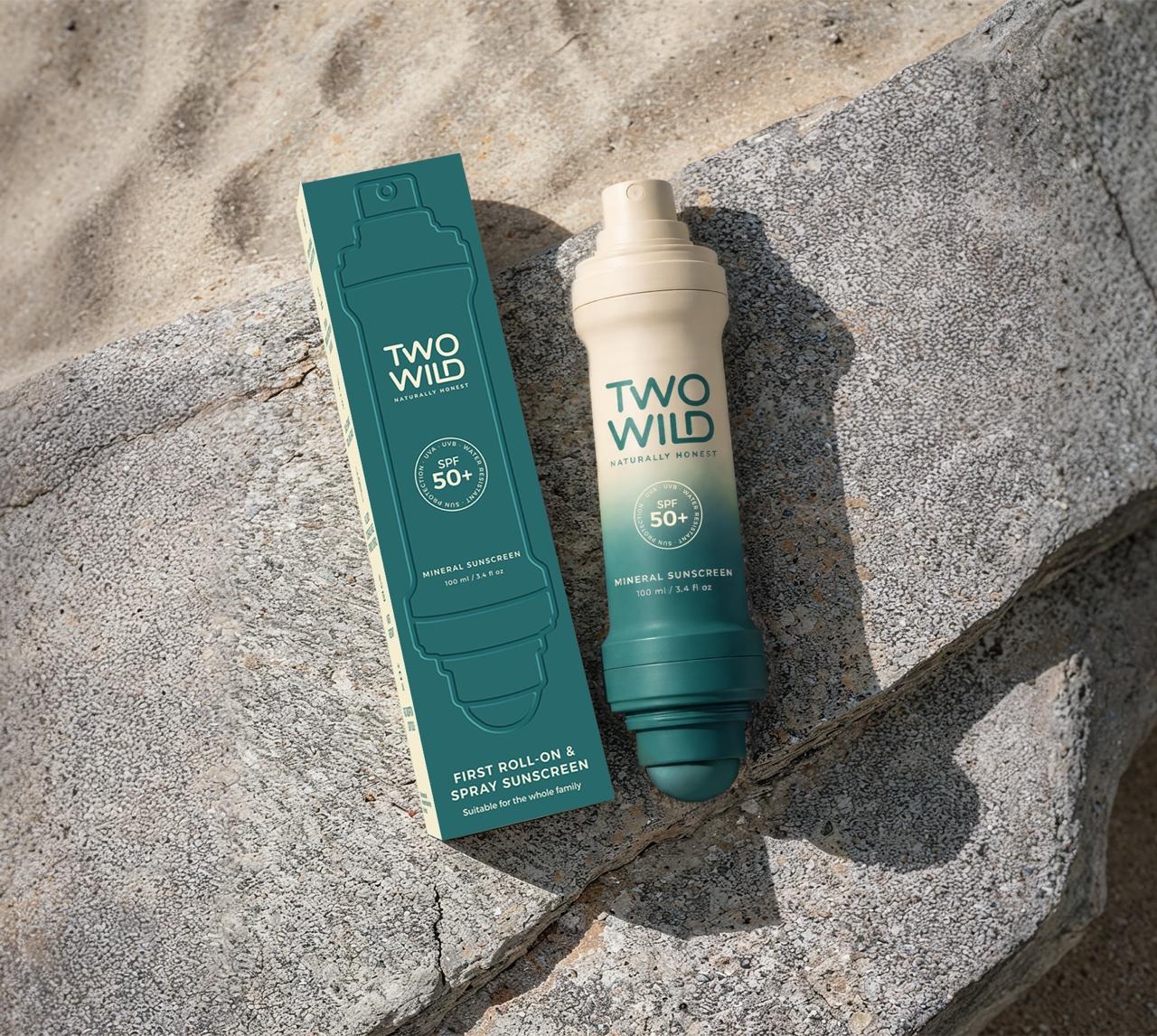
READ THE LABEL
Sunscreen labels should tell you more, not less
Two Wild · 27 September 2026
Sunscreen labels can be difficult to understand. Learn why UV filters, product claims, testing, recalls and ingredient transparency matter.
Most people buy sunscreen for one reason.
Protection from the sun.
They should not need a chemistry degree to understand the product they are putting on their skin.
But sunscreen sits at the intersection of cosmetics, science, regulation and marketing — which means a label can contain a surprising amount of information without necessarily creating much clarity.
We think there is a better approach:
say what a product is, explain what its claims mean, and avoid pretending that complex formulation decisions can be reduced to a handful of fashionable words.
Start with the UV filters
The first useful question is simple:
what type of UV filters does the sunscreen use?
UV filters are the active part of a sunscreen responsible for protecting against ultraviolet radiation.
Different jurisdictions permit different lists of sunscreen filters, and regulators continue to assess safety and efficacy data as science develops.
A label should therefore be treated as information, not decoration.
Absorption is not the same thing as harm
Some sunscreen filters have been shown to enter systemic circulation following topical use.
That has prompted further study and regulatory review.
It has also generated headlines that sometimes jump much further than the evidence.
Evidence of absorption makes it important to study potential safety implications.
It does not mean that detection in blood automatically proves a sunscreen ingredient causes harm.
That distinction matters.
Good consumer information should make complicated science clearer, not scarier.
What sunscreen recalls teach us
Ingredient transparency is only one part of product quality.
Manufacturing matters too.
In recent years, several aerosol sunscreen products have been voluntarily recalled after benzene was detected in certain batches.
Importantly, benzene was not intentionally included as a sunscreen ingredient in those products.
The lesson is not that sunscreen is unsafe.
It is that product quality extends beyond a marketing ingredient list.
Raw materials, manufacturing, packaging, stability and quality control all matter.
Claims deserve context
Words such as:
natural mineral reef-conscious broad spectrum water resistant
can all communicate useful information.
But they do not all mean the same thing, and some have formal testing or regulatory requirements while others are largely marketing language.
Consumers deserve to know the difference.
A well-designed label should make a product easier to understand, not simply add more badges.
We prefer specificity
At Two Wild, we think good formulation begins with purpose.
We do not believe technical-sounding ingredients should automatically be treated as bad.
We do not believe botanical-sounding ingredients should automatically be treated as good.
And we do not believe the cleanest-looking marketing claim necessarily creates the best finished product.
The better question is:
why is it there?
Every ingredient should have a reason.
Every claim should mean something.
And every finished product should be able to stand behind both.
The bigger idea
Transparency is not about publishing scary lists of substances to avoid.
It is about making products easier to understand.
That means being precise about what we know.
Being equally precise about what we do not know.
And refusing to turn uncertainty into fear simply because fear sells.
We think personal care can be ambitious without being alarmist.
Naturally honest. Nothing without purpose.
Read next